How to Make Soffritto: A Step-by-Step Guide
- Soffritto is a method, not just three chopped vegetables
- What goes into a basic soffritto?
- Choose the finished dish before choosing the cut
- Pick olive oil, butter, or both
- Use a wide, heavy pan over gentle heat
- Cook in six simple stages
- How long should soffritto cook?
- Fix the problem before adding the next ingredient
- Adapt soffritto to the dish that follows
- Build the sauce without undoing the slow start
Soffritto is a method, not just three chopped vegetables
To make soffritto, finely and evenly chop onion, carrot, and celery, then cook them gently in olive oil, butter, or both until tender and aromatic. Keep the heat low enough that the vegetables soften before their edges darken. A fine batch often takes about 10 to 15 minutes, but the useful finish line is sensory: the raw onion smell is gone, the pieces are soft, and the mixture is pale or lightly golden to suit the dish.
That slow start builds the background of ragù, tomato sauce, bean soup, risotto, stew, and braise. It is not one immutable Italian formula. The vegetables, fat, cut, and final color can all change with the recipe.
What goes into a basic soffritto?
The familiar trio is:
- onion for sweetness, moisture, and body;
- carrot for sweetness and color; and
- celery for a fresh, savory aroma.
A common starting pattern is two parts onion to one part carrot and one part celery. Great Italian Chefs uses that 2:1:1 pattern, a roughly 5-millimeter dice, gentle heat, and about 10 minutes in the pan. Treat the ratio as a practical baseline, not a law. An onion-led tomato sauce, a delicate seafood dish, and a long meat ragù do not need the same balance.
The broader meaning is flexible. The Italian dictionary Treccani defines soffritto as a chopped mixture that can include onion, parsley, celery, carrot, and sometimes cured pork, cooked slowly in oil or butter before sauce, meat, vegetables, or other food is added. Garlic, herbs, pancetta, or a different allium may belong in a specific recipe. Add them because that dish calls for them, not because a generic checklist says every soffritto needs everything.
Choose the finished dish before choosing the cut
The smaller the cut, the more readily the vegetables disappear into a sauce. A fine dice is useful for ragù, risotto, and smooth tomato sauces where the base should feel integrated. Slightly larger pieces suit a rustic soup or braise where some vegetable texture is welcome.
Aim for pieces of similar size within the batch. La Cucina Italiana's technique guide emphasizes that the vegetables may be cut very fine for an almost imperceptible base or left coarser when the cook wants to feel them in the finished dish.
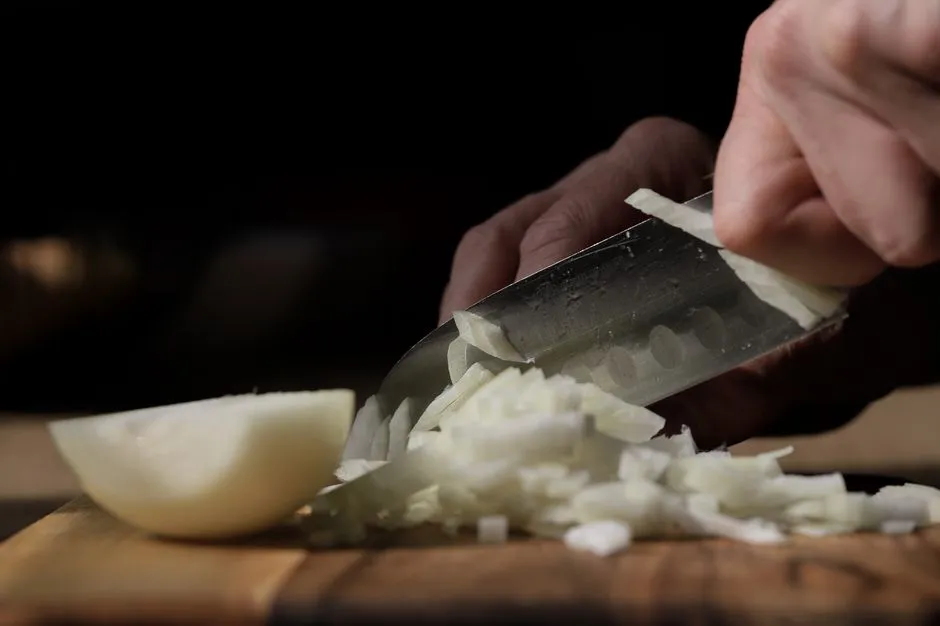
Uniformity matters more than owning a special tool. A chef's knife and cutting board are enough. A mezzaluna is traditional in some kitchens, but not required. A food processor is fast, yet it can turn part of the mixture wet and pulpy while leaving larger pieces behind. If you use one, pulse each vegetable separately and stop before puréeing it.
For a fine hand-cut batch:
- Trim and peel the onion as needed, then cut it into small even dice.
- Peel or scrub the carrot as appropriate and match the onion's size.
- Trim the celery, split a wide stalk lengthwise, and dice it evenly.
- Keep any later additions, such as garlic or tender herbs, separate.
Use a stable board and a sharp knife. Cut at a controlled pace and keep fingertips clear of the blade.
Pick olive oil, butter, or both
Olive oil gives a clean, savory base and is an easy default for tomato sauces, soups, beans, and many braises. Butter brings dairy richness and can suit risotto or northern Italian-style preparations. A combination gives some of each character. Treccani and La Cucina Italiana both recognize oil and butter as appropriate fats; the recipe's final flavor should decide.
Use enough fat to coat the base of the pan and give the vegetables contact with it, without leaving them swimming. There is no responsible universal tablespoon count because vegetable quantity and pan width change the need. Start modestly, stir, and add a little more only if dry vegetables are catching before they soften.
If the dish begins with pancetta, guanciale, or another cured pork ingredient, follow its recipe. The rendered fat may supply part or all of what the vegetables need. Do not automatically add cured meat to a vegetarian foundation, and check labels when allergens or dietary restrictions matter.
Use a wide, heavy pan over gentle heat
A wide pan spreads the vegetables into a shallow layer so moisture can escape. A heavy base moderates sudden temperature changes. Choose a saucepan or sauté pan large enough to stir without throwing pieces over the rim.
Set the pan over low to medium-low heat. Warm oil gently, or melt butter without letting its milk solids brown unless the recipe specifically wants that flavor. Add the vegetables and stir so the fat coats them evenly. A small pinch of salt can help draw moisture, but season lightly if salty stock, cured meat, cheese, or a long reduction comes later.
The sound should be a quiet sizzle. Aggressive snapping, dark edges, or smoke means the pan is too hot. Lower the heat immediately. If the vegetables are catching, move the pan off the burner briefly and stir in a small spoonful of water. Water lowers the pan temperature and releases browned residue; let it evaporate before continuing.
Cook in six simple stages
1. Warm the fat without scorching it
Oil should loosen and move easily across the pan. Butter should melt and foam gently, not turn dark before the vegetables arrive. Starting softly gives the vegetables time to release moisture.
2. Add the onion, carrot, and celery
For an evenly fine dice, add the trio together. Stir until every piece looks lightly coated. If the recipe deliberately uses much larger carrot or celery pieces, give those a short head start rather than forcing unlike cuts to finish together.
3. Keep the layer shallow
Spread the vegetables across the pan after each stir. A deep pile traps steam, slows evaporation, and encourages uneven cooking. If you double a recipe, use a wider pan or cook in two batches instead of assuming the time will remain the same.
4. Stir regularly, not constantly
Give the vegetables contact with the warm pan, then stir before the edges color too far. Scrape across the base and into the corners. Constant stirring can slow cooking; walking away long enough to scorch the onion creates a problem the later sauce cannot hide.
5. Add quick-burning aromatics later
Minced garlic can become bitter before carrot and celery soften, so add it near the end unless the recipe specifies very low heat or a different cut. Tender parsley and other fresh herbs may also be held back. Woody herbs, spices, or cured meat follow the timing of the particular dish.
6. Stop at the color the dish needs
For a pale, delicate base, stop when the onion is translucent and all three vegetables are tender. For a deeper ragù, stew, or braise, continue until the mixture is lightly golden and smells rounded. Do not confuse light gold with scorched brown flecks.
How long should soffritto cook?
Plan on roughly 10 to 15 minutes for a modest, finely cut batch over gentle heat. Great Italian Chefs gives around 10 minutes; La Cucina Italiana's classic soffritto guide gives at least 15 minutes over very low heat. That difference is useful: pan, moisture, cut, batch size, and desired color all move the clock.
Use these cues together:
- Look: onion turns translucent; carrot and celery lose their raw stiffness; the pieces settle into the fat.
- Smell: sharp raw onion gives way to a sweeter, fuller aroma.
- Feel: a piece of carrot yields when pressed with the spoon instead of skittering across the pan.
- Sound: the early wet hiss becomes gentler as water cooks away.
- Color: pale for a subtle base, light gold for more depth, never black at the edges.
Taste a cooled piece if you are unsure. It should no longer crunch like raw vegetable. Do not lean over hot fat or taste directly from a hot spoon.
Fix the problem before adding the next ingredient
| What is happening | Likely cause | What to do now |
|---|---|---|
| Onion edges darken while carrot stays firm | Heat too high or cuts uneven | Lower heat, add a spoonful of water, and keep cooking gently |
| The pan fills with liquid | Batch crowded or vegetables very wet | Spread into a wider pan and let moisture evaporate |
| Vegetables stay pale but feel tender | Normal for a pale base | Continue only if the dish wants golden notes |
| Mixture looks dry and sticks | Pan too hot or too little fat | Lower heat; loosen with water, then reassess fat after it evaporates |
| Garlic smells sharp or bitter | Added too early or browned too far | If burnt, discard the batch; bitterness carries forward |
| The base tastes very sweet | Too much carrot or too much browning for the dish | Correct the ratio in the next batch; do not bury it under extra salt |
Burnt soffritto is not worth rescuing. Dark, bitter flecks spread through everything added afterward. Clean the pan and start again; the vegetables cost less than a full pot of sauce.
Adapt soffritto to the dish that follows
Tomato sauce: Keep the cut fine and usually stop at tender or lightly golden. Tomato will dominate the pan soon, so finish softening the vegetables first.
Ragù: Use a fine cut so the vegetables merge into a long-cooked sauce. Light gold can add depth, but avoid crisp edges. Add meat only after the base reaches the intended tenderness, then follow the recipe's browning and liquid sequence.
Bean soup or minestrone: A slightly larger cut can remain visible. Stop the soffritto before it is fully soft if the vegetables will simmer for a long time afterward, but do not leave the onion raw.
Braise or stew: The base can take gentle golden color before meat and liquid are added. If meat must be browned hard, many recipes handle that in a separate step so the vegetables do not burn.
Risotto: A very fine onion-led base is common, while carrot and celery may be reduced or omitted according to the recipe. Keep strong browning out of a pale risotto unless it is deliberate.
The site's comparison of soffritto and mirepoix explains why the two foundations overlap without being interchangeable.
Build the sauce without undoing the slow start
Once the soffritto is ready, raise the heat only as the next ingredient requires. Tomato may need a gentle simmer. Meat may need enough room and heat to brown. Rice needs the sequence and liquid additions in its recipe. The base has done its job when it supports those ingredients without announcing separate cubes of raw onion, carrot, or celery.
For pasta sauce, finish the noodles and sauce together rather than treating the aromatic base as the last texture decision. The guide to finishing pasta in sauce covers transfer timing, reserved water, tossing, and the final coating.
Make notes the first time you cook a new dish: approximate vegetable amounts, cut size, pan, heat, time, and finish color. Next time, you will know whether to use less carrot, a finer celery dice, a wider pan, or five more quiet minutes. That is how soffritto becomes a dependable method instead of a line in a recipe you rush past.