How to Finish Pasta in Sauce for Better Texture
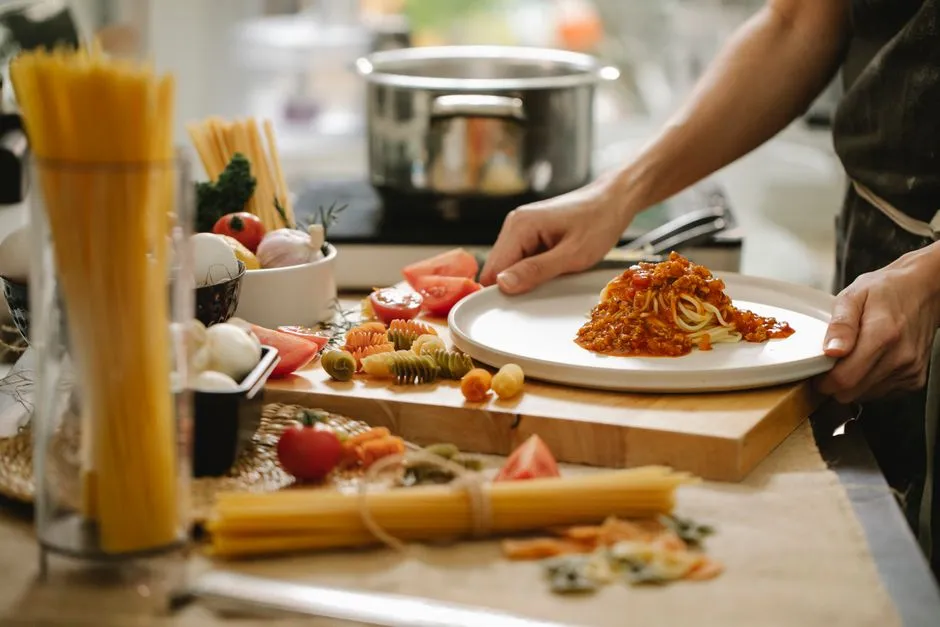
Finish pasta in sauce during its final minute
Finishing pasta in sauce means transferring the noodles while they are still slightly firmer than you want to serve them, then completing the cooking in a pan of hot sauce. The last minute or two lets the pasta absorb flavor while tossing distributes sauce over every surface.
This is a coordination technique, not a fixed countdown. Pasta shape, brand, pan size, sauce temperature, and the strength of the burner all change the timing. Taste before the package time ends and keep tasting in the pan.
Set up before the pasta is ready
For two servings, have these elements in place:
- about 6 ounces (170 grams) dried pasta;
- a wide pan holding enough prepared sauce for two servings;
- tongs, a spider, or a colander;
- a heat-safe cup for reserving cooking water; and
- any cheese, herbs, butter, or olive oil intended for the finish.
Bring the sauce to a gentle simmer while the pasta cooks. If it is already thick, loosen it with a small splash of plain water before the transfer. A cold, dense sauce can cool the pasta and steal the short finishing window.
Reserve water, then transfer early
Just before the pasta reaches your preferred texture, reserve 1 to 2 cups of its cooking water. You may use only a fraction, but saving extra is easier than trying to recreate it after draining.
Move the pasta when its center still feels a little too firm to serve. Long shapes can go directly from pot to pan with tongs; short shapes work well with a spider. If using a colander, drain briefly and do not rinse. A little clinging water is useful.
The goal is not a chalky, raw center. If the pasta needs many more minutes, it will require so much liquid in the sauce that the balance can change.
Add pasta water by the splash
Start with roughly 2 tablespoons of reserved water for two servings. Toss or stir the pasta continuously over moderate heat. Add another tablespoon or two when the sauce looks tight, greasy, or unable to move around the pan.
The water supplies moisture and some starch. Agitation helps that water combine with the sauce's fat into a cohesive coating. The result should look glossy and fluid, not soupy. Oil- and butter-based sauces often need more cooking water than a loose tomato sauce.
Salt is concentrated in both sauce and cooking water, so taste before adding more seasoning. If the water is very salty, use smaller additions.
Read the pan instead of the clock
The pasta is ready when three things happen together:
- The center has the tenderness you want.
- The sauce coats the pasta instead of sitting in a puddle.
- A path drawn across the pan fills slowly rather than flooding or staying dry.
If the pasta is done but the sauce is watery, lift the noodles out and reduce the liquid briefly. If the pan dries before the pasta softens, add more reserved water. If the sauce turns oily, a splash of water and vigorous tossing may bring it back together.
Finish delicate ingredients with less heat
Turn the heat low or off before adding finely grated hard cheese, fresh herbs, or an extra piece of butter. Residual heat and tossing can melt and disperse them without scorching herbs or making cheese seize into clumps.
For cheese-heavy sauces, let the pan cool for a few seconds and add the cheese gradually. Keep a little water available because the coating thickens as it sits.
The same attention to heat is useful earlier in a sauce. Understanding soffritto and mirepoix helps you decide whether an aromatic base should stay soft or develop golden notes.
Serve while the coating is still loose
Pasta continues absorbing liquid after it leaves the burner. Stop with the sauce slightly looser than the final texture you expect, plate immediately, and serve. A dry-looking pan rarely improves on the walk to the table.
The reliable sequence is simple: reserve, transfer, toss, adjust, taste. Explore more timing and texture methods in Pasta Skills.